
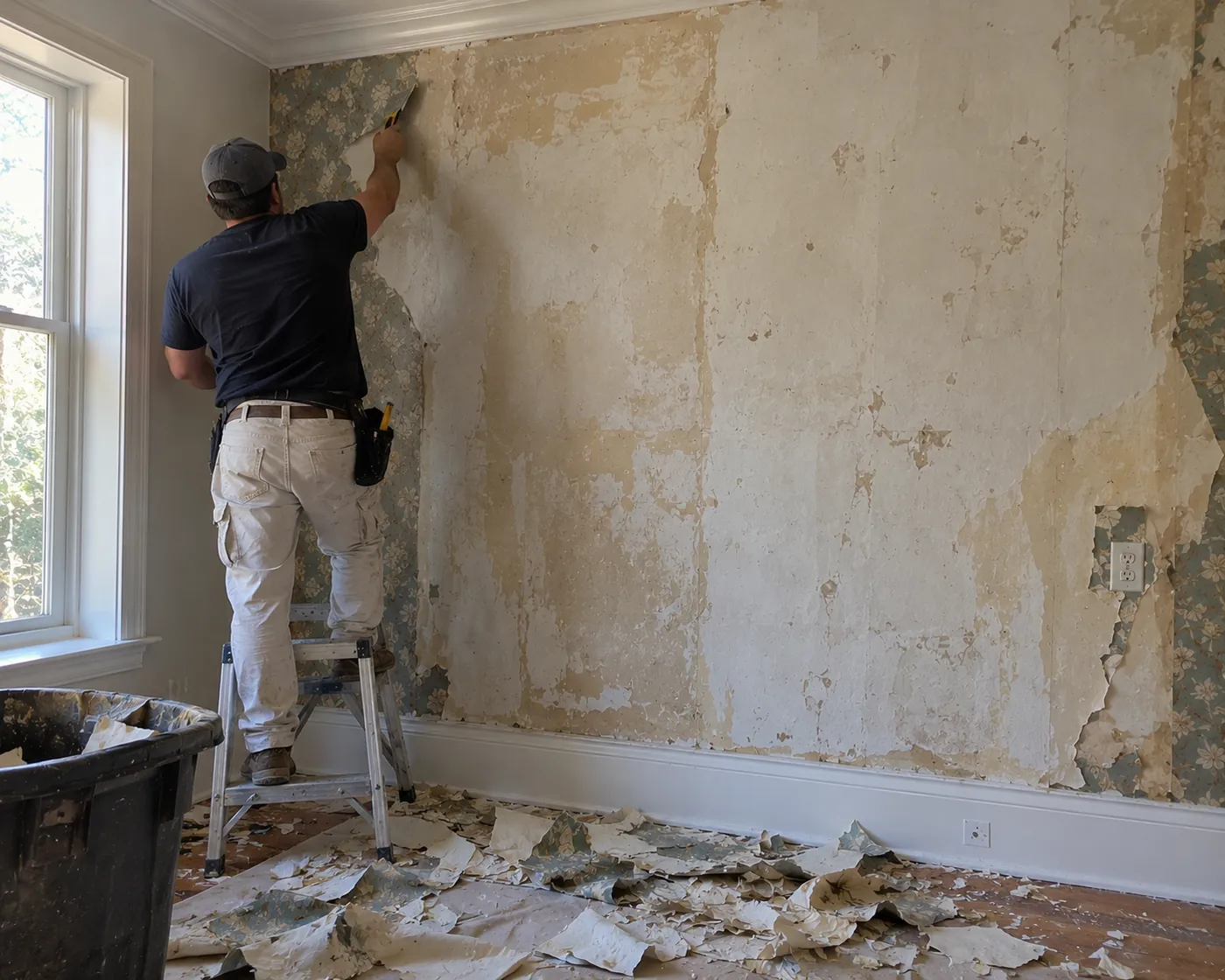
Removing old wallpaper is slow, messy and easy to get wrong — one aggressive scrape can tear the drywall face. We take it down carefully, wash off the adhesive and leave walls smooth and ready for paint or new paper.
Why wallpaper removal goes wrong
Most homeowners who try removal hit the same wall, literally: the paper comes off, but the brown paper face of the drywall comes with it. That happens when wallpaper was hung on drywall that was never primed, so the paste bonded directly to the drywall paper. Once that face tears, paint and new wallpaper will bubble unless the damage is sealed.
Before we start, we test a small area to see how the paper is built and how the wall reacts. That test tells us which method will be fastest without damaging the surface.
Our removal process
- Protect the room. Floors, trim and outlets are covered; furniture is moved to the middle of the room or out.
- Dry strip where possible. Many nonwoven and strippable papers peel off dry in full sheets.
- Separate layers. Vinyl papers often leave a paper backing behind; we remove the vinyl first and then soak the backing.
- Soak and scrape. Warm water with a removal solution, applied in sections and given time to work. Steam is reserved for stubborn papers and plaster walls.
- Wash off the adhesive. Leftover paste is the reason paint cracks and new paper fails, so walls are washed until they are clean to the touch.
- Repair and seal. Torn drywall paper is sealed with a stain-blocking primer made for damaged drywall, then patched and sanded.
- Ready for the next step. Primed for paint, or primed with a wallcovering primer if new wallpaper is going up.
Borders, painted-over wallpaper and plaster
Wallpaper borders are common in homes remodeled in the 1990s and are often hung over paint with strong paste. Painted-over wallpaper needs to be scored and soaked through the paint layer, and it can take longer than bare paper. Plaster walls in older Seattle homes usually handle water well, but cracks and loose areas behind the paper need repair once it is off.
Older homes: if your home was built before 1978, painted layers on or under the wallpaper may contain lead. Tell us when you book so we can plan testing and lead-safe work practices before any scraping or sanding.
Removal before new wallpaper
We do not hang new wallpaper over old wallpaper. The old layer can release when wet paste soaks it, seams can show through and bubbles appear weeks later. Removal and prep are usually part of the same estimate, so the new paper goes onto a sound, primed wall. Our guide on why wallpaper bubbles explains the problems that skipping removal tends to cause.
What is included
- Test patch to choose the right method
- Dry stripping, soaking or steaming
- Vinyl and backing layers removed
- Adhesive residue washed off
- Torn drywall sealed and repaired
- Primed for paint or new wallpaper
- Debris bagged and hauled away
Wallpaper removal for Seattle-area homes and businesses
Wallpaper removal is often the first step in a room update, whether the next finish is paint, new paper or a different wall treatment. The work itself is straightforward in principle, but the time it takes and the condition of the wall afterward depend on what is actually on the wall. This section explains how to tell what you have, how to prepare the room, and what to expect at each stage.
How to tell what kind of wallpaper you have
You can learn a lot from a quick test before you send photos. Lift a corner at a seam with a putty knife and see what happens:
- The whole sheet peels off cleanly. This is usually a strippable or nonwoven product. Removal tends to be faster, though the paste left behind still has to be washed off.
- A thin top layer peels away and leaves paper on the wall. This is typically vinyl or vinyl-coated paper with a backing. The backing needs to be soaked and scraped.
- Nothing lifts, or it tears into small pieces. This points to traditional paper, painted-over wallpaper or paper hung with heavy adhesive. Expect slower soaking and scraping.
- The paper lifts with brown or gray paper attached. The drywall face is coming with it, which means the wall was likely not primed before the original installation. Stop and let us assess it.
- The paper is stuck tight but feels slick or plastic. This can be a solid vinyl or a fabric-backed wallcovering, more common in commercial spaces and some older kitchens and baths. It usually needs to be peeled in layers before the backing is soaked.
Take a photo of what you see and include it when you contact us. It helps us plan the method and the time needed.
What affects the time and effort
| Condition | Why it matters | What usually follows |
|---|---|---|
| Single layer on primed drywall | Paper releases without much surface damage | Wash, light patching, prime |
| Multiple layers | Each layer has to be soaked and removed separately | More soaking time and more residue to wash |
| Paper on unprimed drywall | Paste is bonded to the drywall face | Sealing torn areas, patching, often a skim coat |
| Painted-over wallpaper | Paint blocks water from reaching the paste | Scoring and repeated soaking |
| Bathroom or exterior wall paper | Possible moisture damage behind the paper | Checking the wall before any new finish |
Preparing the room before removal day
Removal involves water, wet paper and scraping, so a little preparation on your side keeps the day moving:
- Clear small items, artwork and fragile decor from the room.
- Let us know about any electrical outlets, thermostats or alarm sensors on the papered walls.
- Point out areas where you have seen water stains, soft spots or peeling paint.
- Plan for the room to be out of use for the duration of the work and drying time.
- Keep pets and children out of the work area while walls are wet.
We cover floors and trim, move furniture to the center or out of the room, and shut off power to outlets on wet walls when needed.
Mistakes that make removal harder
Some common shortcuts create extra repair work later. Scoring tools pressed hard into the wall can puncture the drywall face and leave rows of small holes that show through paint. Soaking a whole wall at once lets sections dry before they are scraped, so the paste sets again. Over-wetting drywall can soften the gypsum underneath. Painting directly over leftover adhesive is another frequent problem: the paste reactivates under water-based paint and causes cracking or peeling. If a DIY attempt has already started, send photos of the current state so we can see what has been disturbed.
Tip: if some of the old paper is still in good shape in a closet or behind furniture, leave a sample attached. It shows how the paper was built and which layers are involved.
After removal: choosing the next finish
Once the walls are clean, the next step depends on what comes next. For paint, walls are repaired and primed with a primer suited to the surface. For new paper, walls are prepared and primed with a wallcovering primer, and the new installation can follow as part of the same project. Our wallpaper installation page covers that process. If the wall needs more than patching, our wall preparation service covers skim coating and surface repair, and the guide on skim coating before wallpaper explains when it is worth doing.
Removal for designers, landlords and contractors
Wallpaper removal is often scheduled between tenants, before a sale, or as part of a larger remodel. Property managers can send photos from each unit so we can review conditions room by room. Designers and general contractors can share the plan for the new finish so the removal and preparation match what goes on the wall next. For larger wallcovering removal in offices or retail spaces, see commercial wallpaper and wallcovering.
What to send for a wallpaper removal estimate
- Photos of each papered wall, plus a close-up of a seam or lifted corner
- Approximate wall widths and ceiling height
- The approximate age of the home and whether the paper has been painted over
- What you plan for the walls afterward: paint, new wallpaper or something else
We review the photos and wall condition, visit if needed and send a written estimate for the removal and any preparation that follows. Send your photos, measurements and plans through our contact page or call (206) 380-4118, every day from 7 am to 10 pm.
Recent projects
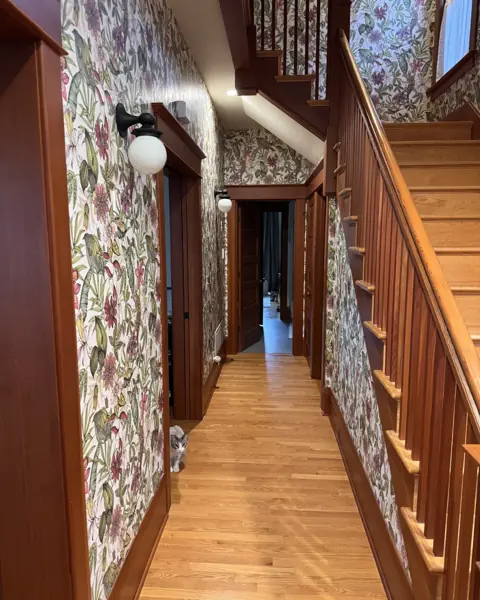
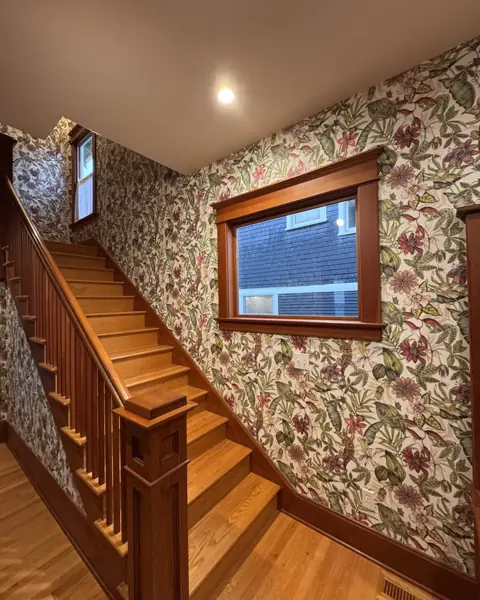
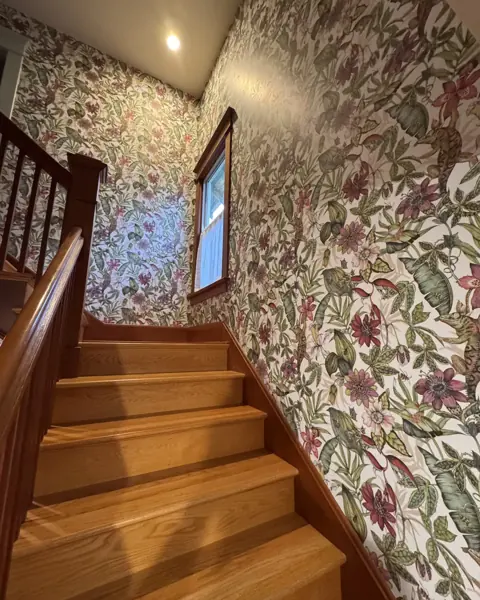
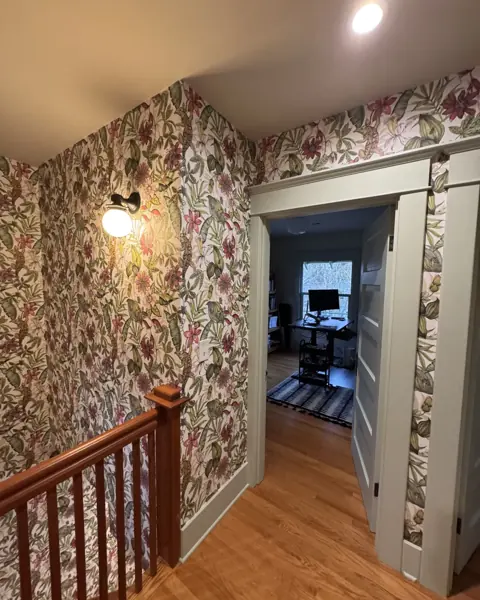
Questions about wallpaper removal
How long does wallpaper removal take?
One room usually takes one to two days, depending on how many layers there are, whether the paper was painted over and how much drywall repair is needed afterwards.
Can you remove wallpaper without damaging the drywall?
In most cases, yes. Damage happens when the drywall was never primed. When the paper face tears anyway, we seal and repair it so the wall paints or papers smoothly.
Will you paint after removing wallpaper?
We prepare and prime the walls so they are ready for paint. If you want new wallpaper, we prime with a wallcovering primer and hang it as part of the same project.
Do you remove wallpaper from ceilings and bathrooms?
Yes. Ceilings, bathrooms and kitchens are common. Bathrooms often need extra repair if moisture got behind the old paper.
Can I stay in my home while wallpaper is being removed?
Yes, in most cases. The work is limited to the rooms being stripped, and those rooms are covered and closed off as much as possible while the walls are wet.
Is steam always used to remove wallpaper?
No. Many papers come off with dry stripping or a soak-and-scrape method. Steam is used only when the paper or adhesive does not respond to other methods.
What should I do if the drywall started tearing when I tried removing the paper myself?
Stop removing paper in that area and do not paint over it. Send us photos of the torn sections so we can plan sealing and repair before any new finish goes on.
Helpful guides
Local pages
Where we offer wallpaper removal
Seattle and surrounding cities: