
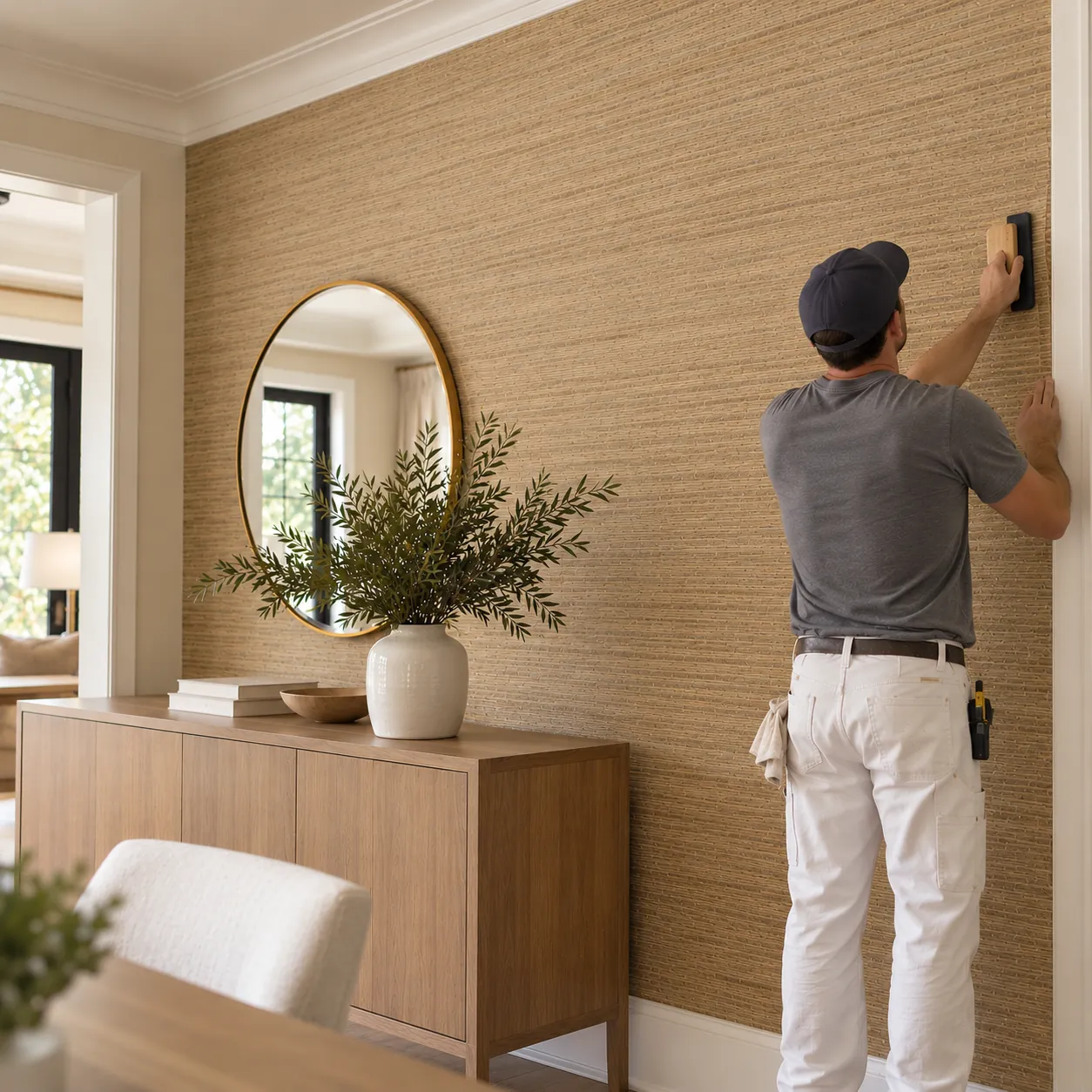
Natural wallcoverings are beautiful because every strip is a little different. They are also unforgiving: a drop of paste on the face can stain it for good. We hang grasscloth with clean hands, sharp blades and seams planned for how light hits the wall.
What makes grasscloth different
Grasscloth is woven plant fiber laminated to a paper backing. Because the fibers are natural, each strip can vary in color and the seams are visible by design — the goal is seams that look intentional and even, not seams that disappear. Water and paste on the face can leave permanent marks, and the material can shift color when it gets wet.
How we install natural wallcoverings
- Inspect every roll. We check run numbers and shading in daylight before the first cut, so mismatched rolls are caught while you can still return them.
- Reverse-hang if the maker says so. Many grasscloths are hung with every other strip flipped to even out shading from edge to edge.
- Plan seams around the light. Seams are placed away from windows and grazing light where possible.
- Clear-drying adhesive, no paste on the face. Paste is applied carefully to the back, edges are protected and nothing is wiped on the face with a wet sponge.
- Tight, single cuts. Fresh blades for every cut keep fibers from fraying at ceilings, trim and outlets.
Natural and specialty materials we hang
Sisal, jute, arrowroot and seagrass grasscloth; paperweaves; cork; raffia; silk and linen wallcoverings; mica; and printed grasscloth designs. We also install grasscloth-look vinyls, which give a similar texture but are scrubbable and better suited to bathrooms and busy hallways. Our guide to wallpaper materials compares the options.
Where grasscloth works — and where it does not
Grasscloth is a great fit for living rooms, bedrooms, dining rooms, offices and behind built-ins. It is not a good choice where it will be splashed or touched constantly: behind a sink, in a full bathroom with a shower or in a mudroom. Moisture from Puget Sound winters is not a problem in a heated room, but steam and splashes are. In those spaces we suggest a vinyl grasscloth look instead.
What is included
- Roll inspection for shading and run numbers
- Wallcovering primer in a tone that suits the material
- Seam plan based on light and focal points
- Reverse-hanging where specified
- Paste kept off the face
- Fresh-blade cuts at every edge
- Care tips and labeled leftovers
Grasscloth wallpaper installation: planning, preparation and care
Choosing grasscloth means accepting a material that behaves differently from printed paper or vinyl. The fibers absorb liquid, the color shifts slightly from strip to strip and every seam stays visible. Good grasscloth wallpaper installation starts long before the first strip goes up: with the right walls, a complete order from one run, and an honest conversation about how the finished wall will look. This section covers those planning steps so homeowners and designers know what to expect.
Before you order: quantities and runs
Grasscloth is usually sold in rolls or bolts that differ from standard wallpaper sizes, and many products are not returnable once cut. A few points help avoid a short or mismatched order:
- Order the full quantity at once so all rolls come from the same production run. A reorder months later can look noticeably different on the wall.
- Include extra for trimming at the ceiling and floor and for strips that may need to be set aside because of shading.
- Keep the packing slip and labels; run numbers are printed there and on the roll ends.
- Leave the rolls sealed and stored flat in a dry, heated room until we inspect them.
Our wallpaper calculator gives an approximate roll count, and the guide on wallpaper dye lots and ordering explains why matching runs is so important with natural fibers. If you send the product link and measurements, we can review the quantity before you place the order.
Preparing walls for natural wallcoverings
Grasscloth is thicker than most papers, but it does not hide much. Ridges, nail pops and patch edges can show through the weave, especially under side light. The paper backing also needs a sound, evenly sealed surface to hold its adhesive. Typical preparation includes:
- Removing any existing wallpaper and washing off old adhesive. See our wallpaper removal service for how that is done.
- Repairing cracks, dents and damaged drywall paper, then sanding repairs flush.
- Skim coating walls with heavy texture or many patches, so the backing sits flat. The guide on skim coating before wallpaper covers when this step is necessary.
- Applying a wallcovering primer. Because some grasscloths are slightly translucent between fibers, the primer color is chosen so it does not show through the weave.
The full range of repairs is described on our wall preparation page.
Comparing natural fiber options
Each natural material has its own texture and handling. The table summarizes the differences homeowners usually ask about.
| Material | Texture and look | Installation notes |
|---|---|---|
| Sisal | Fine, tight weave with a fairly even surface | Seams are less pronounced; shading still varies between strips. |
| Jute | Coarser, more irregular fibers | Edges can fray if cut with a dull blade; seams are more visible. |
| Seagrass and arrowroot | Thicker strands with strong texture | Heavier strips; careful trimming at ceilings and openings. |
| Paperweave | Twisted paper woven to look like grass | Often more uniform in color than plant fibers. |
| Vinyl grasscloth look | Printed or embossed texture | Washable, more consistent color, suited to busier rooms. |
Room-by-room considerations
Living and dining rooms. Large walls with windows are where shading between strips is most noticeable. Seam placement is planned with the main viewing angle in mind, and fireplace surrounds and built-ins are treated as natural break points.
Bedrooms. A headboard wall is a common choice. If the wall has a centered bed, we often center a strip or a seam on it so the layout looks balanced.
Home offices and libraries. Grasscloth behind shelving or in a study adds warmth without a busy pattern. Shelving brackets and outlets are cut cleanly so fibers do not pull.
Stairwells and entries. Long, tall drops show color variation from top to bottom and side to side. These walls need more inspection time and careful handling of long strips. Hands and bags brush against entry walls often, so we discuss whether a vinyl alternative makes more sense there.
Kitchens and laundry rooms. Natural fibers are generally not recommended near cooking or water. The guide on wallpaper in kitchens and laundry rooms covers more suitable materials.
If you are deciding between two grasscloth samples, tape them to the actual wall and look at them in the morning and in the evening. Natural fibers change noticeably with daylight and lamp light, and a sample that looks neutral at noon may read warmer at night.
What to expect from the finished wall
A well-hung grasscloth wall shows straight, tight seams and consistent fiber direction, with clean edges at trim and ceilings. It will not look like one uniform sheet; slight changes in tone from strip to strip are part of the material. Light from a window running along the wall makes texture and seams more visible than light facing the wall. We explain these points during the estimate so the result matches expectations.
Living with grasscloth in the Pacific Northwest
Homes around Seattle are often closed up for much of the fall and winter, so indoor humidity can rise in rooms without good ventilation. Natural fibers are fine in heated, ventilated rooms, but long periods of dampness or direct sun near a south- or west-facing window can affect the material over time. Running a bathroom fan and keeping furniture slightly away from the wall helps. For regular care, the guide on how to clean wallpaper explains dry cleaning methods.
Requesting an estimate
We provide grasscloth wallpaper installation in Seattle, Kirkland, Bellevue, Redmond and the other cities we serve. To start, send photos of the walls, rough measurements and the product link or name, including roll size and any hanging instructions from the manufacturer, through our contact page, or call or text (206) 380-4118 any day from 7 am to 10 pm. We review the walls and material and send a written estimate.
Recent projects
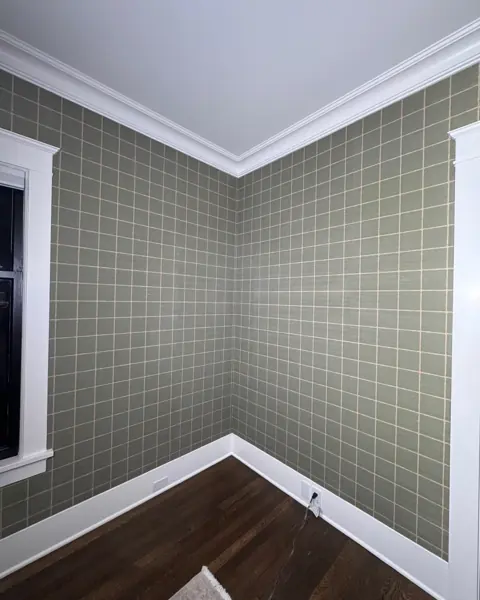
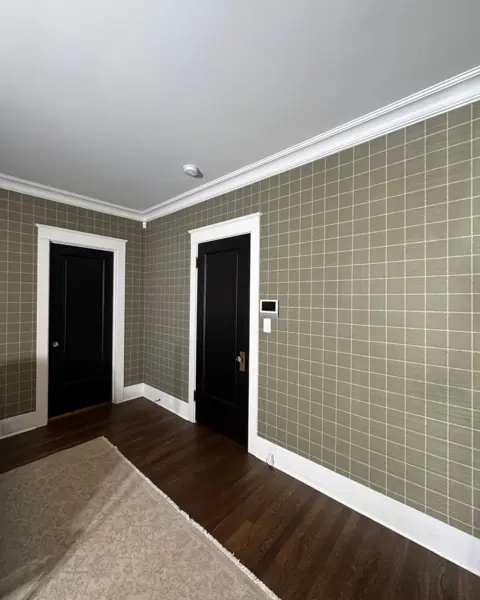

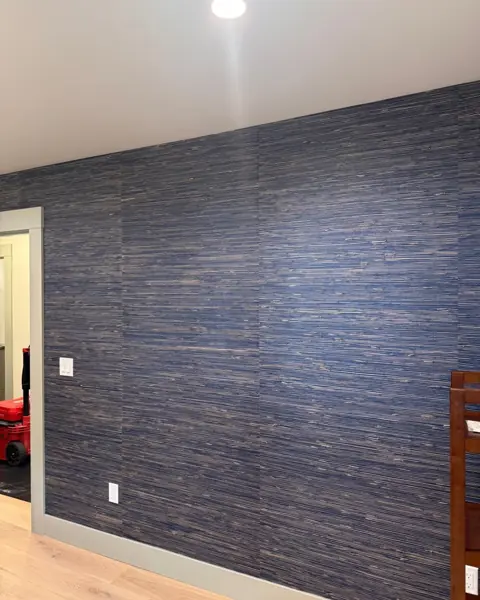
Questions about grasscloth wallpaper installation
Are grasscloth seams supposed to show?
Yes, some seam visibility is normal because the fibers end at each edge. A good installation keeps seams straight, tight and placed where they are least noticeable.
Can grasscloth go in a bathroom?
In a powder room without a shower it often works well. In a full bathroom with steam we recommend a vinyl grasscloth-look product instead.
How do I clean grasscloth?
Dust it with a soft brush or vacuum attachment. Avoid water and cleaners; blot spills right away with a dry cloth. Our cleaning guide covers each wallpaper type.
Why does my grasscloth look like different colors?
Natural fibers vary between rolls and runs. We check rolls before hanging and, when the manufacturer recommends it, reverse-hang strips to balance shading.
Should I open the grasscloth rolls when they arrive?
Check that the count and run numbers match your order, but keep the rolls wrapped and stored flat in a dry room. We unroll and inspect them in good light before cutting.
Can grasscloth be hung over existing wallpaper?
We do not recommend it. The old paper can loosen under the new material, so it is usually removed and the wall is repaired and primed first.
Can grasscloth be painted later if I want a change?
Painting grasscloth is generally not recommended because the fibers absorb paint unevenly. Removing it and preparing the wall for a new finish is the usual approach.
Helpful guides
Local pages
Where we offer grasscloth wallpaper installation
Seattle and surrounding cities: