

A mural is one picture printed in panels. If the panels drift by a quarter inch, the whole image breaks. We measure before you order, plan where the image is cropped and hang every panel in sequence so the scene reads as one piece.
Measure first, order second
Most mural problems start at checkout. Murals are printed to the size you enter, and walls are rarely perfectly square. We measure width and height at several points, note outlets, windows and trim, and recommend how much bleed to add so we can trim the image at the ceiling and baseboard without losing important parts of the design. Our guide on murals versus repeating wallpaper covers when a mural is the better choice.
How we hang a mural
- Dry layout. Panels are unrolled and checked in order before any paste goes on, so a misprint or wrong panel is caught early.
- Image placement. We decide where the focal point of the image sits: centered on a bed, above a sofa or framed by a window.
- Plumb start line. The first panel sets the image for the whole wall, so it is hung to a laser or plumb line, not to the corner.
- Overlap or butt seams. Some murals are designed with an overlap that is double-cut; others butt edge to edge. We follow the printer's instructions.
- Trimming. The bleed is trimmed at ceiling, floor and corners, and openings are cut so the image wraps naturally.
Murals we install
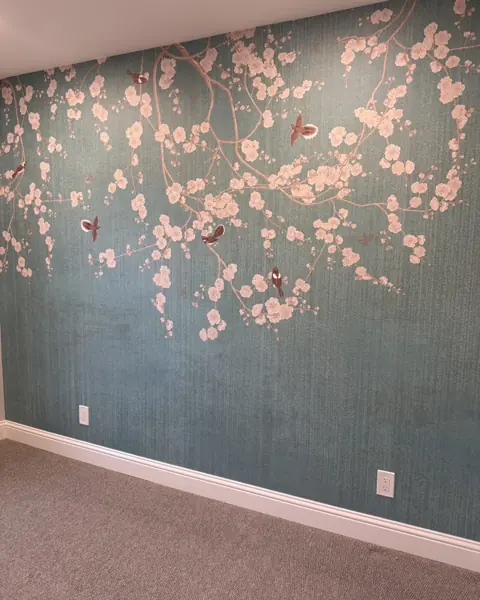
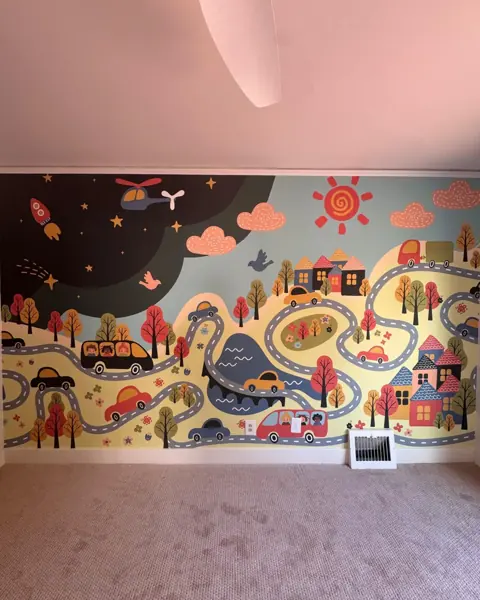
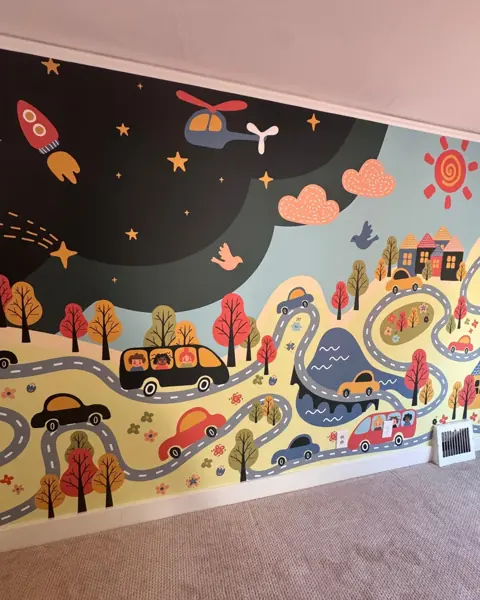
Scenic and landscape murals for living and dining rooms, watercolor city scenes, botanical and chinoiserie-style panels for powder rooms, kids' murals for nurseries and playrooms, ceiling murals such as skies and clouds, and large-format printed murals for offices and retail spaces. Many are nonwoven paste-the-wall panels; some are peel-and-stick or vinyl, which we handle with the adhesive the manufacturer specifies.
Walls that suit a mural
Because a mural is one continuous image, flaws in the wall show more than they do under a busy repeating print. Smooth drywall with a wallcovering primer is ideal. Heavy texture or patched areas may need a skim coat first; we will point those out during the estimate rather than after the mural is up.
What is included
- Measurements before you order
- Bleed and crop recommendations
- Dry layout of all panels
- Wallcovering primer
- Plumb first panel and aligned seams
- Trimming at ceiling, floor and openings
- Leftover sections saved for touch-ups
Wall mural installation: from choosing a wall to the final trim
A mural can change a room more than almost any other finish, but it leaves less room for error than repeating wallpaper. The image is printed once, in a set order, to a set size. That is why wall mural installation depends on decisions made before the panels arrive: which wall, what size, which material and how the image is cropped. This section walks through those decisions so homeowners, designers and business owners can plan a mural that fits the wall it is going on.
Choosing the right wall for a mural
The wall matters as much as the image. When we review photos, we look at:
- Interruptions. A mural reads most clearly on a wall with few doors and windows. Each opening removes part of the image, so a wall with a large window may suit a pattern better than a scene.
- Viewing distance. In a hallway you see a mural from a few feet away; in a living room you see it across the room. Fine detail suits close views, large shapes suit long ones.
- Furniture. A sofa, bed or console will cover the lower part of the image. Placing the focal point above the furniture line keeps the important parts visible.
- Corners. Wrapping a mural around a corner is possible, but walls are rarely perfectly square and some distortion at the corner is normal. A single flat wall gives the cleanest result, and it also makes it easier to plan where the image starts and ends.
If you are still deciding between a mural and a pattern, the guide on mural vs repeating wallpaper compares the two.
Mural formats and how they install
| Format | How it goes up | Things to know |
|---|---|---|
| Nonwoven, paste-the-wall | Adhesive is rolled on the wall and dry panels are applied | Stable, does not expand much; usually strippable later. |
| Paper, paste-the-paper | Panels are pasted and booked before hanging | Paper can stretch slightly when wet, so timing between panels matters. |
| Vinyl or commercial printed goods | Hung with the adhesive the printer specifies | Durable and washable; often used in offices, retail and kids' rooms. |
| Peel-and-stick | Self-adhesive panels pressed onto the wall | Needs a smooth, fully cured, clean surface; less forgiving to reposition on large panels. |
The printer's instructions decide the method, the adhesive and whether panels overlap or butt. We read those instructions before the estimate, because they affect both the preparation and the time on site.
Preparing the wall surface
Murals are often a single color field or a soft gradient across large areas, so dips, ridges and patched spots catch light more than they would under a busy repeating print. Preparation for a mural can include removing old wallpaper, repairing drywall, skim coating textured walls and priming. Our wall preparation page describes those steps, and our skim coating guide explains when it is worth doing. If old wallpaper is still on the wall, it is removed first through our wallpaper removal service.
Fresh paint and fresh skim coat need to dry fully before a mural goes up, and peel-and-stick panels in particular need a fully cured paint film. If the walls are being painted or repaired just before installation, let us know the dates so the schedule allows for it.
Murals by room
Living and dining rooms. Scenic and landscape images are common. We usually plan the horizon line or main subject at a comfortable eye level for a seated room.
Bedrooms and nurseries. A mural behind the bed is a popular choice. For kids' rooms, a washable or nonwoven product is easier to keep clean and to change as the child grows.
Powder rooms and small spaces. A small room wrapped in a botanical or chinoiserie-style mural can look striking, but every wall has a door, mirror or fixture, so panel order and cropping need extra planning.
Ceilings. Sky and botanical designs can continue onto the ceiling. That work follows the approach on our ceiling wallpaper installation page.
Offices, cafes and shops. Branded graphics and large printed images are scheduled around business hours. Larger projects are covered under commercial wallpaper installation.
Mistakes that are easy to avoid
- Ordering to the exact wall size with no bleed, which leaves nothing to trim at uneven ceilings and floors.
- Measuring at one point only. Ceiling heights and wall widths often change across a wall, especially in older houses.
- Trimming panels before installation. Panels should arrive untouched; trimming is done on the wall.
- Placing an important part of the image, such as a face or a building, where a switch, thermostat or outlet will cut through it.
- Installing over glossy paint or a dusty surface, which can keep the adhesive from bonding.
What to send for a mural estimate
For wall mural installation in Seattle and nearby cities such as Shoreline, Kirkland, Bellevue and Renton, a useful request includes a straight-on photo of the wall, photos of outlets, windows and trim, width and height measured at a few points, and the product link or the printer's specification sheet. If you have already ordered, tell us the size you entered and how many panels arrived. You can also browse our portfolio for examples of murals in different rooms.
Send your photos, measurements and mural details through the contact page, or call or text (206) 380-4118 any day between 7 am and 10 pm. We review the wall and the mural specifications and reply with questions or a written estimate.
Recent projects

Questions about wall mural installation
How much extra should I order for a mural?
Most printers recommend a few inches of extra width and height for trimming. We measure your wall and give you the exact size to enter, so you neither run short nor waste a lot of the image.
Can you install a mural on a ceiling?
Yes. Sky, cloud and botanical ceiling murals are popular. Ceilings take longer and need scaffolding or planks, which we include in the estimate.
Do you install murals in kids rooms?
Yes. Kids murals are a favorite. We often suggest a scrubbable or nonwoven product so it handles fingerprints and can be removed later.
My mural arrived — what should I check?
Make sure all panels are there and numbered, compare the colors between panels and keep everything flat and dry. Do not trim anything; we trim on the wall.
Can a mural be installed over textured walls?
Light texture can show through a mural, especially in smooth areas of the image. Heavier texture is usually skim coated first so the panels lie flat.
Is it possible to use the same mural on two walls?
Yes, but the image needs to be ordered for each wall separately or as one wider print that wraps the corner. We can help decide which works better for the layout.
What if one panel arrives damaged or misprinted?
Contact the printer before installation, since most will reprint a single panel. This is one reason we lay out all panels and check them before any adhesive goes on.
Helpful guides
Local pages
Where we offer wall mural installation
Seattle and surrounding cities: