Quick answer
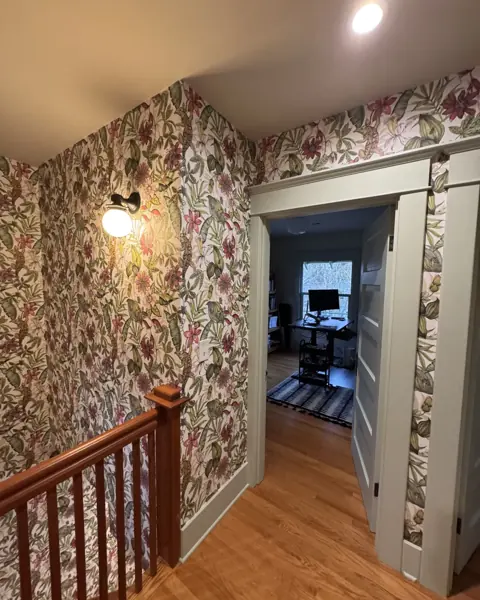
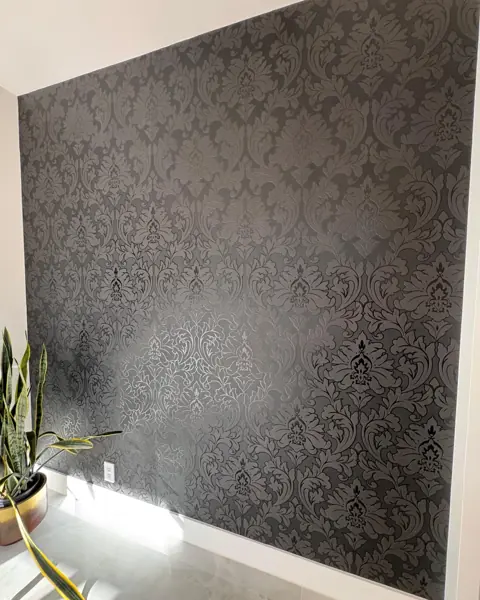
In an open floor plan, use wallpaper to define a zone — the dining wall, the wall behind a sofa or the end of a sight line — and stop it at a natural break such as an inside corner, a door casing or a change in ceiling height. Avoid ending paper in the middle of a flat wall.
Key points
- Pick walls that finish a sight line.
- Natural stopping points make paper look intentional.
- Large rooms suit larger pattern scales or textures.
- Coordinate paint colors across the connected spaces.
The challenge with open layouts
In a traditional room, wallpaper fills four walls and stops at the corners. In an open plan, walls run between the kitchen, dining and living areas, so there is often no obvious place to start or stop. The answer is to treat wallpaper as a way to define one area.
Good walls to paper
- The wall behind a dining table or buffet.
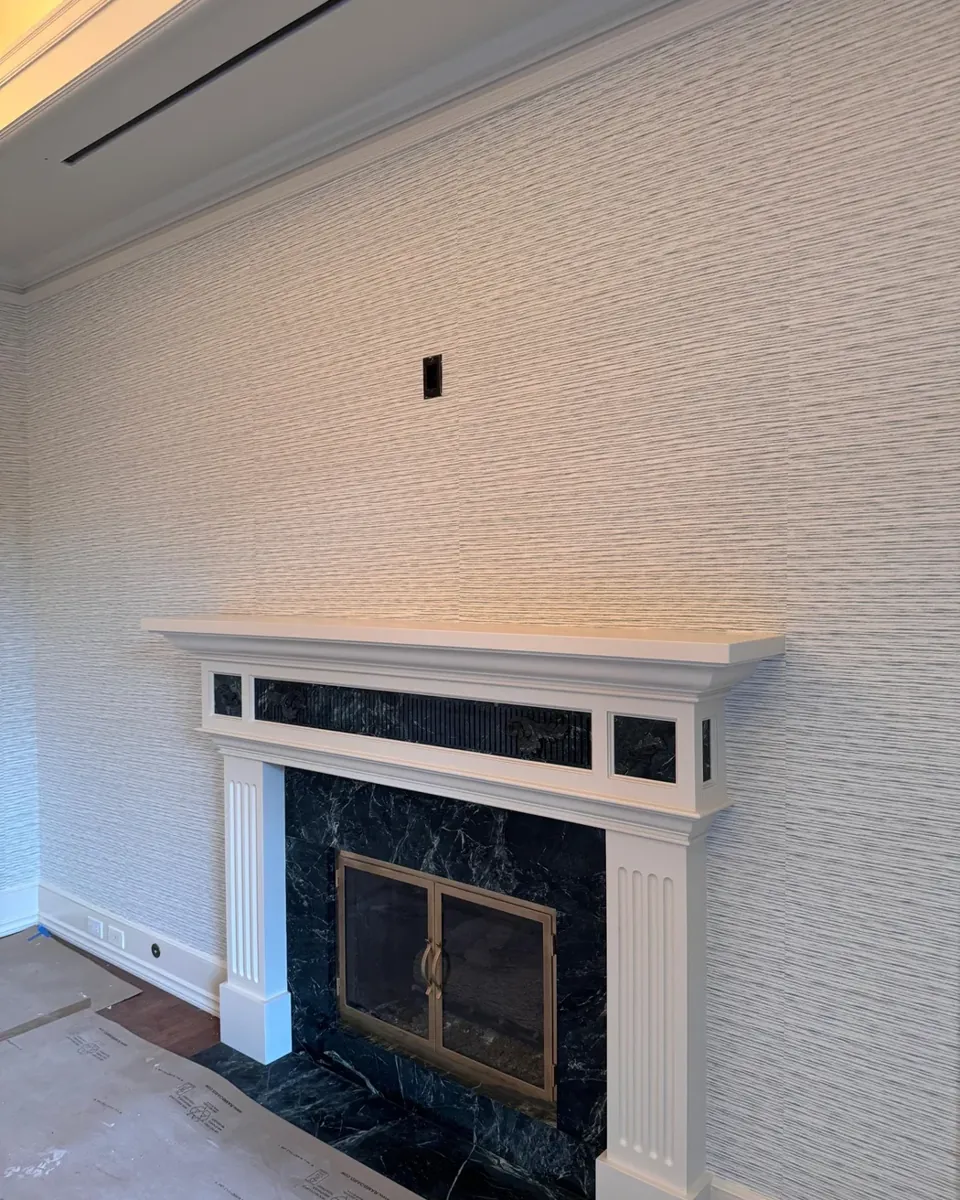
- The wall behind the sofa or around a fireplace.
- The wall at the end of a long view from the entry.
- A wall around a built-in or niche.
- A stair wall that rises out of the main space.
Natural stopping points
| Stop at | Result |
|---|---|
| Inside corner | Clean and expected |
| Outside corner | Works if paper wraps fully; edge is exposed to bumps |
| Door or window casing | Crisp, framed edge |
| Change in ceiling height or soffit | Follows architecture |
| Middle of a flat wall | Usually looks unfinished — avoid |
Scale, color and texture
Large rooms can carry large-scale patterns, murals and textures such as grasscloth or linen looks. Pick a paint color for the surrounding walls that appears in the paper so the spaces connect. In bright rooms, plan for how side light shows seams; see grasscloth: what to expect.
Kitchen-adjacent walls
Walls near the cooktop and sink need washable materials and should stay clear of splash zones. See wallpaper in kitchens.
Planning the layout
Send photos from several viewpoints — the entry, the kitchen and the sofa — so the pattern can be centered where it is seen most. More about how we approach layout: wallpaper installation.
FAQ
Can I wallpaper just part of a wall?
It can work if the paper stops at a clear architectural line such as a soffit or casing. Stopping in the middle of a flat wall rarely looks right.
Should the whole open area be wallpapered?
Usually not. One or two well-chosen walls define the space better than covering everything.
What about a TV wall?
A texture or calm pattern works better than a busy print behind a screen.