Quick answer
A single accent wall usually takes a few hours to half a day once the wall is ready. A standard bedroom is often one day, a powder room one day, and a stairwell or ceiling one to two days. Removing old wallpaper, repairing walls or skim coating adds one to three days because of drying time.
Key points
- Prep, not hanging, is usually what makes a job long.
- Primer and joint compound need drying time before paper goes up.
- Small rooms with many cut-outs take longer per square foot than big plain walls.
- Grasscloth, murals and ceilings are slower than standard nonwoven paper.
Typical timelines by project
These ranges assume walls that only need light patching and primer. Your estimate will list the real schedule for your room.
| Project | Typical time on site | What changes it |
|---|---|---|
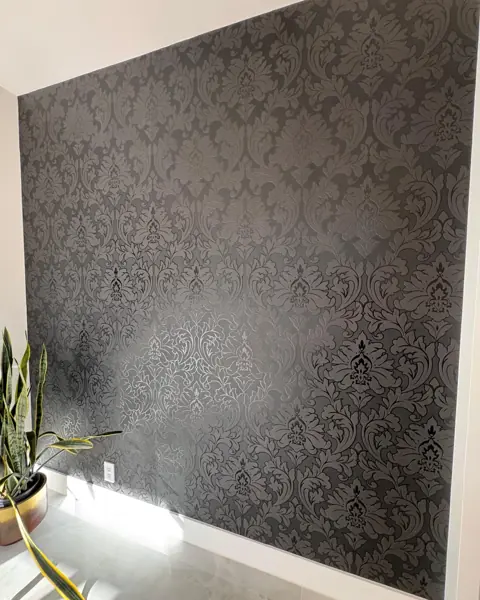
| One accent wall | 3–6 hours | Wall size, outlets, windows, pattern repeat |
| Powder room | About 1 day | Toilet and vanity cut-outs, mirror and fixture removal |
| Bedroom (4 walls) | 1 day | Closets, windows, sloped ceilings |
| Full bathroom | 1–2 days | Tile edges, shower surround, ventilation |
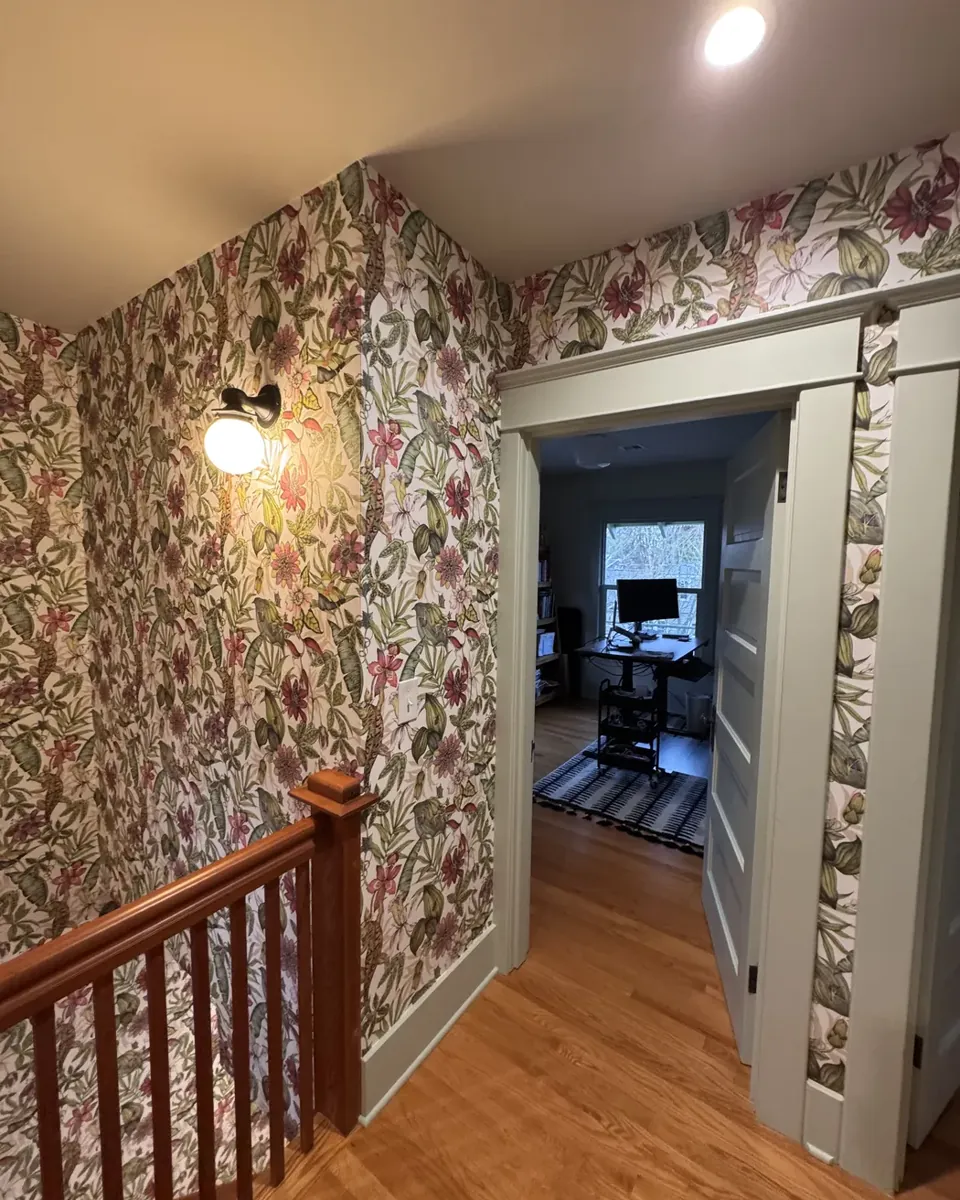
| Stairwell or two-story entry | 1–2 days | Scaffold setup, wall height, long matched drops |
| Ceiling | 1 day or more | Fixtures, room size, overhead setup |
| Mural | Half a day to 1 day | Number of panels, ceiling height, openings |
What adds days to the schedule
Removing old wallpaper
Removal is often slower than installation. Strippable papers can come down in an hour; painted-over vinyl on unprimed drywall can take a full day per room, followed by washing off the adhesive and repairing torn drywall paper. See our wallpaper removal service for how it is done.
Repairs and skim coating
Joint compound dries slowly in a cool, damp Puget Sound house — in winter it can take overnight for each coat. A skim coat over textured walls usually means two coats and sanding, so plan on one or two extra days. Our guide on skim coating before wallpaper explains why.
Primer drying time
Most wallcovering primers are dry enough to hang over in a few hours, but some stain-blocking primers need longer. On small jobs we often prime first thing and hang later the same day.
The paper itself
Paste-the-wall nonwovens are the fastest to hang. Traditional papers need booking time — the pasted strip rests folded for several minutes so it can expand before it goes on the wall. Grasscloth needs careful handling to keep paste off the face. Murals require a dry layout of every panel before hanging.
How to keep your project on schedule
- Order enough paper, all from the same batch. Running short mid-job is the most common delay. Use our roll calculator and add a spare.
- Have the paper on site before installation day. Check the rolls for damage and matching batch numbers when they arrive.
- Clear the room. Remove small items, art and fragile decor. We move furniture, but emptied shelves save time.
- Tell us about anything unusual. Old paper under paint, water damage, or a building with restricted work hours all affect the plan.
- Keep the heat on. A room at normal living temperature helps paste, primer and compound cure on time.
How long until the paper is fully set?
Wallpaper looks finished the day it goes up, but paste keeps curing for a day or two. Small bubbles that appear right after hanging often flatten as the paper dries. Avoid hanging heavy art, scrubbing the surface or running a space heater right at the wall for the first 48 hours. Our article on wallpaper bubbles covers what is normal.
A sample schedule: bedroom with old wallpaper
Here is how a common project — a 12 by 14 foot bedroom with 1990s wallpaper still on the walls — usually plays out:
- Day 1, morning: furniture moved, floors covered, test patch to see how the old paper comes off.
- Day 1, afternoon: old paper stripped, backing soaked and scraped, adhesive washed off.
- Day 1, end of day: torn drywall sealed with a primer for damaged drywall; patches started.
- Day 2, morning: patches sanded, wallcovering primer applied.
- Day 2, afternoon: wallpaper hung, outlets and switch plates reinstalled, clean-up.
The same room with clean, painted walls would usually be finished in one day.
How we schedule
We answer the phone from 7 am to 10 pm every day, so it is easy to book an estimate at a time that works for you. After the estimate, the written quote lists the number of days on site and anything you need to do beforehand. For multi-room projects we plan the order of rooms so you always have a usable bedroom or bathroom.
Waiting on wallpaper delivery
The longest wait in many projects is the paper itself. Stock papers can arrive within days; designer and custom-printed papers can take several weeks, and backorders happen. Order as soon as quantities are confirmed and check the delivery for matching batch numbers as soon as it arrives, so there is still time to fix a problem before installation day.
Commercial timelines
Commercial jobs are scheduled differently: by floor, room block or phase, often after hours. A hotel corridor or office floor is planned around operations, with daily clean-up so spaces stay usable. See commercial wallcovering.
FAQ
Can you wallpaper a room in one day?
Yes, many bedrooms and powder rooms are finished in one day if the walls only need light patching and primer.
Do I need to leave the house during installation?
No. Most clients stay home. We keep the work area contained and clean up at the end of each day.
How far ahead should I book a wallpaper installer?
Book the estimate as soon as you are considering wallpaper, so quantities are confirmed before you order. Installation can then be scheduled for when the paper arrives.