Quick answer
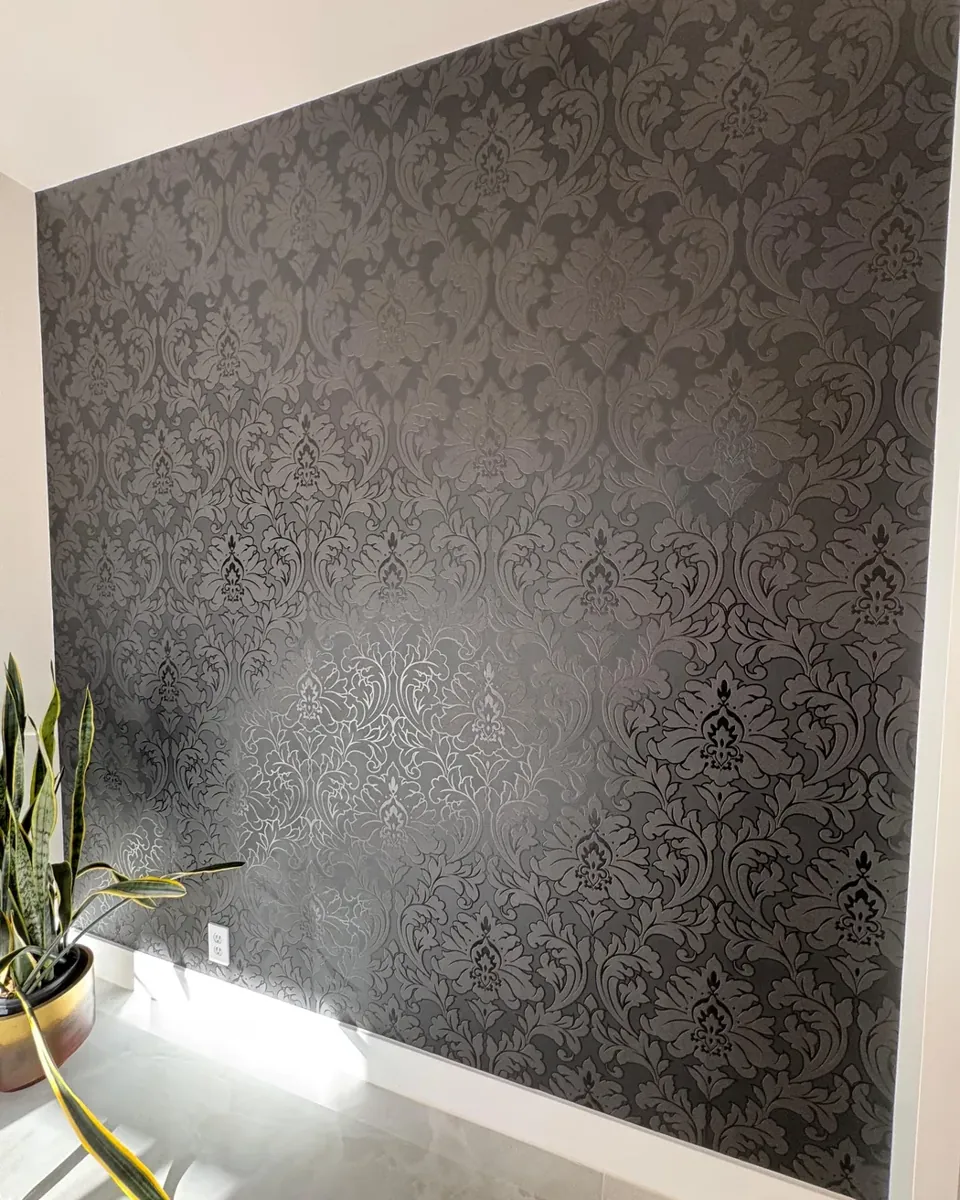
Choose the wall your eye lands on first when you enter the room, or the wall behind the main piece of furniture — the bed, sofa, dining buffet or desk. A solid wall without doors or windows shows a pattern best. Avoid walls that are mostly openings or that you only see from a hallway.
Key points
- The focal wall is usually opposite the entrance or behind the main furniture.
- Solid walls show pattern better than walls broken by windows and doors.
- Large patterns suit large walls; small rooms can handle bold prints on one wall.
- Accent walls still need primer and careful corner cuts.
Start with the sight line
Stand in the doorway you use most and look straight ahead. In most rooms that wall is the natural accent wall, because it is the first thing you and your guests see. If that wall is mostly windows, look at the wall behind the main piece of furniture instead.
Room by room
Bedroom
The wall behind the headboard is the classic choice. It frames the bed, you do not stare at it while trying to sleep, and it is usually a solid wall. Center large motifs on the bed rather than on the wall if the bed is off-center.
Living room
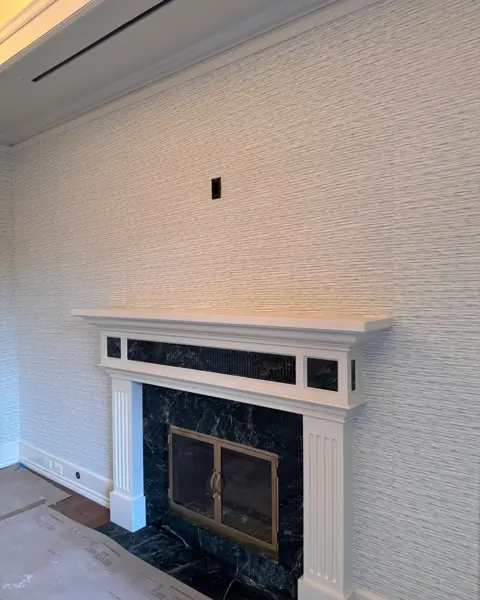
Use the wall behind the sofa or the wall around the fireplace or TV. If the TV wall is the focal point, consider a calmer texture — grasscloth, a linen look or a subtle geometric — so the pattern does not compete with the screen.
Dining room
Dining rooms are where people sit and look at the walls for a long time, which makes them perfect for scenic murals and bold prints. Choose the wall facing the main seating or the wall behind a buffet.
Home office
Wallpaper the wall behind your desk chair if you are on video calls, so it becomes your backdrop. Our home office wallpaper guide has more ideas.
Nooks, alcoves and built-ins
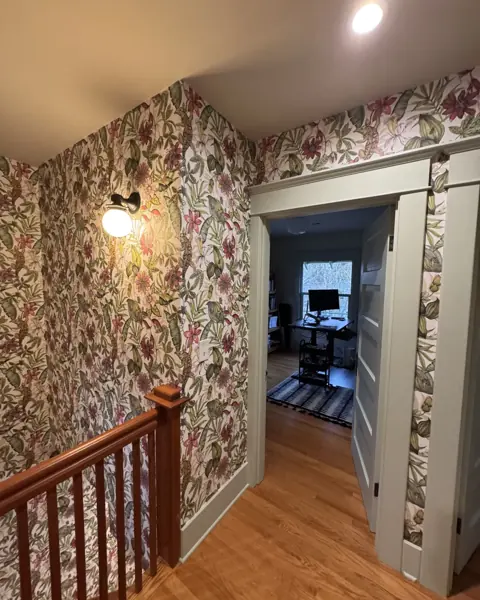
Small recessed areas — a reading nook, the back of bookshelves, a niche at the end of a hall — are some of the most effective places to use wallpaper. They need only a roll or two, so they are also a good place to use an expensive designer paper.
Pattern scale and wall size
Large-scale patterns need room to repeat. On a narrow wall a big motif may only appear once and look cut off. Smaller repeats work on narrow walls, while large walls can carry big florals, murals and wide geometrics. Hold up a large sample, or tape several samples together, and step back to the doorway before you decide.
Common accent wall mistakes
- Choosing the wall with the door. Doors and windows chop the pattern into small pieces.
- Ignoring adjacent walls. The accent wall meets painted walls at two corners. Pick a paint color that appears in the paper.
- Skipping primer because it is just one wall. Edges against paint are where paper lifts first if the wall was not primed.
- Ordering exactly enough paper. Pattern repeat waste adds up quickly even on one wall. Use our calculator.
When to do more than one wall
Small rooms — powder rooms, laundry rooms, closets — often look better fully wrapped, because one papered wall in a tiny space can feel unfinished. See wallpaper for small spaces for why bold papers work so well in small rooms.
Testing before you commit
Samples are small, and a wall is big. A few simple tests prevent most regrets:
- Order the largest sample available, or two samples so you can see the pattern repeat.
- Tape it to the actual wall at eye level and look at it in the morning, afternoon and at night with lamps on.
- Step back to the doorway. Patterns read very differently from across the room than in your hand.
- Photograph it. A photo flattens the view and often shows whether the pattern overwhelms or disappears.
Matching paint to the accent wall
The other walls in the room become the frame. Pull a quiet color from the paper — often the background color or a softened version of one accent color — and use it on the remaining walls. Trim can stay white, or go a shade darker than the walls for a more tailored look. Grasscloth and textures pair well with warm whites and soft greiges common in Puget Sound homes.
Accent walls in open floor plans
In open-plan homes there is no obvious "room" for the accent wall to belong to. Use the wallpaper to define a zone: the wall behind the dining table, the wall at the end of the living area, or a wall that closes off a sight line from the entry. Avoid papering a wall that runs between two zones; it can make the space feel chopped up.
Where the paper should stop
Most accent walls run corner to corner and ceiling to baseboard. On walls with no natural stopping point — a long hallway, a wall that continues into another room — we look for an outside corner, a door casing or a change in ceiling height to end the paper cleanly. Ending it in the middle of a flat wall almost never looks intentional.
FAQ
Should the accent wall be the wall with the TV?
It can be, but choose a calmer pattern or texture so the wall does not compete with the screen.
Is one wall of wallpaper outdated?
No. A well-placed feature wall is still one of the most popular uses of wallpaper, especially behind beds, sofas and desks.
What paint finish goes next to a wallpaper accent wall?
Eggshell or matte on the surrounding walls usually looks best next to wallpaper. Very glossy paint can make the paper look flat by comparison.