Quick answer
Nonwoven is the best all-round choice for most rooms: stable, easy to hang and usually easy to remove. Vinyl and vinyl-coated papers are the most durable and washable, so they suit kitchens, bathrooms and busy hallways. Traditional paper offers beautiful printing but is less washable. Grasscloth and other naturals are for low-traffic, dry rooms.
Key points
- "Washable" and "scrubbable" are different ratings — check the roll label.
- Vinyl resists moisture on the surface but can trap moisture behind it.
- Nonwoven papers are breathable and often strip off dry.
- Natural wallcoverings stain with water and should not be scrubbed.
The main wallpaper materials
Nonwoven
Nonwoven wallpaper is made from a blend of natural and synthetic fibers. It is breathable, tear-resistant and does not stretch much when pasted. Most are paste-the-wall and strippable. It is the material we recommend most for bedrooms, living rooms, offices and murals.
Solid vinyl and vinyl-coated
Solid vinyl has a vinyl surface layer on a paper or fabric backing; vinyl-coated paper has a thinner protective coating. Both can be wiped clean, and solid vinyls are often scrubbable. They are a good fit for kitchens, laundry rooms, kids rooms, hallways and commercial spaces. Because vinyl is less breathable, it needs a properly primed wall and good ventilation in damp rooms.
Traditional paper
Uncoated paper wallpapers are prized for printing quality, matte finishes and classic designs. They are less resistant to scuffs and water and usually need to be soaked off later. They are lovely in bedrooms, dining rooms and formal living rooms.
Grasscloth and natural fibers
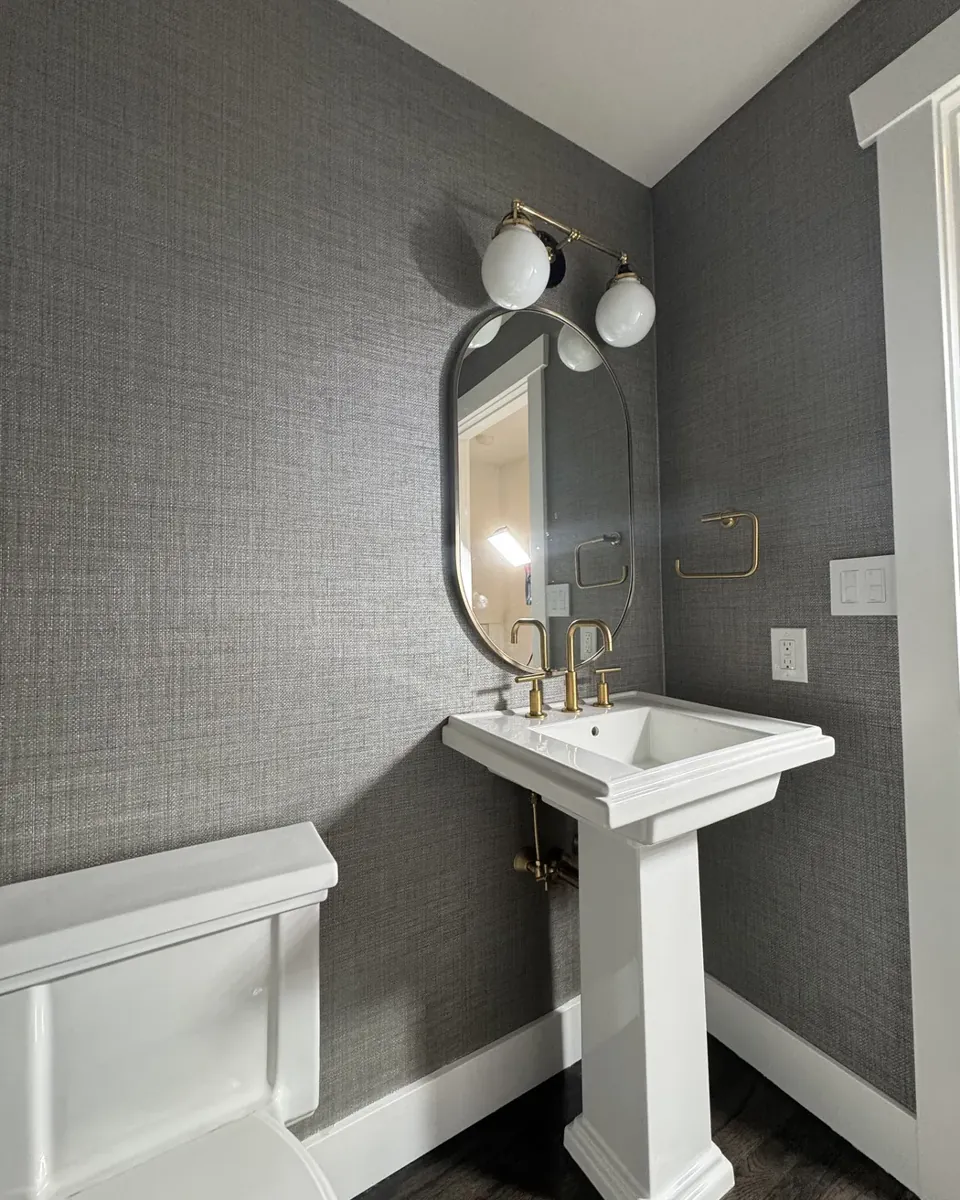
Woven natural fibers such as sisal, jute and arrowroot on a paper backing. Beautiful texture, visible seams, and very sensitive to water and stains. See our grasscloth installation service.
Specialty: metallic, silk, flocked, beaded
Specialty papers reflect light or have raised surfaces. They show wall flaws clearly and need a very smooth, well-primed wall.
Comparison table
| Material | Durability | Cleaning | Moisture | Best rooms |
|---|---|---|---|---|
| Nonwoven | Good | Wipe gently | Fair | Most rooms, murals, rentals |
| Solid vinyl | Excellent | Scrubbable (check rating) | Good surface resistance | Kitchens, baths, halls, commercial |
| Vinyl-coated | Good | Washable | Fair to good | Kids rooms, laundry |
| Traditional paper | Fair | Dust only | Poor | Bedrooms, dining rooms |
| Grasscloth | Fair | Dust only | Poor | Living rooms, offices, dry rooms |
Reading the label
Wallpaper labels use symbols for cleaning (spongeable, washable, scrubbable), light-fastness, application method and removal. Spongeable means you can blot it with a damp sponge; washable means gentle wiping with mild soap; scrubbable means it can take a soft brush. Our cleaning guide covers each one.
Matching material to the room
- Powder room: almost anything works, including grasscloth, if there is no shower.
- Full bathroom: vinyl or a nonwoven rated for humid rooms, plus a working fan. See wallpaper in kitchens and laundry rooms for similar advice.
- Hallway and stairs: vinyl or a durable nonwoven — see wallpaper for high-traffic hallways.
- Bedroom and living room: nonwoven, paper or grasscloth.
- Kids room: scrubbable nonwoven or vinyl-coated.
Breathability and our climate
Puget Sound homes spend much of the year closed up with the heat on, and exterior walls can get cool enough for condensation. Breathable papers — nonwovens and traditional papers — let small amounts of moisture pass through. Solid vinyl does not, so it relies on a well-primed wall and a dry structure behind it. That is not a reason to avoid vinyl; it is a reason to use it where its toughness matters and to make sure bathrooms and laundry rooms are ventilated.
What each material costs you in labor
Material affects installation time. Nonwoven paste-the-wall papers are generally the quickest to hang. Traditional papers take longer because of booking and careful handling. Heavy vinyls and commercial goods need heavier adhesives and often double-cut seams. Grasscloth, silk and metallics are the slowest, because every strip is handled to keep paste off the face. Your estimate reflects the material you choose.
Questions to ask before you buy
- Is it nonwoven, paper, vinyl or natural fiber?
- What is the cleaning rating (spongeable, washable, scrubbable)?
- Is it paste-the-wall, paste-the-paper or prepasted?
- What are the roll size and pattern repeat?
- Is it strippable or peelable for future removal?
- Is it rated for humid rooms, if it is going in a bathroom?
Peel-and-stick in the mix
Most peel-and-stick wallpapers are vinyl with an adhesive backing. They suit small areas and renters, but they can lift on textured or freshly painted walls and are harder to align over long strips. On a large or visible wall, a nonwoven paper usually gives a better result.
FAQ
Is vinyl wallpaper good for bathrooms?
Yes, vinyl handles splashes and humidity on the surface well. Pair it with a good primer and a working exhaust fan.
Which wallpaper is easiest to remove?
Nonwoven papers labeled strippable are usually the easiest; they peel off dry when hung on a primed wall.
What is the most durable wallpaper for a kids room?
A scrubbable vinyl or a washable, vinyl-coated nonwoven. Both handle fingerprints and wiping far better than uncoated paper.