Quick answer
For hallways and entries, choose a scrubbable vinyl or a durable washable nonwoven, a pattern busy enough to hide scuffs, and consider pairing it with wainscoting or a chair rail so the lower wall takes the knocks. Avoid grasscloth and uncoated papers where bags, hands and pets brush the wall.
Key points
- Scrubbable vinyl is the most durable residential option.
- Mid-tone patterns hide marks better than solids.
- Wainscot or chair rail protects the bottom third of the wall.
- Commercial corridors use Type II vinyl for durability.
Why hallways are hard on wallpaper
Hallways and entries are narrow, so shoulders, bags, strollers, vacuum cleaners and pets brush the walls constantly. Outside corners get bumped. Hands touch the wall near light switches and on stairs. The right material makes the difference between a wall that looks new for years and one that looks tired in months.
Durable materials
- Solid vinyl: scrubbable, tough surface; the best residential choice for heavy traffic.
- Vinyl-coated paper: washable; good for moderate traffic.
- Durable nonwoven: many are washable and stand up well in average hallways.
- Commercial Type II vinyl: for apartment corridors, offices and hotels — see commercial wallcovering.
Patterns that hide wear
Mid-tone, all-over patterns hide scuffs and fingerprints far better than pale solids or very dark plain colors. Small geometrics, florals and textured looks are all forgiving.
Pair it with wainscot
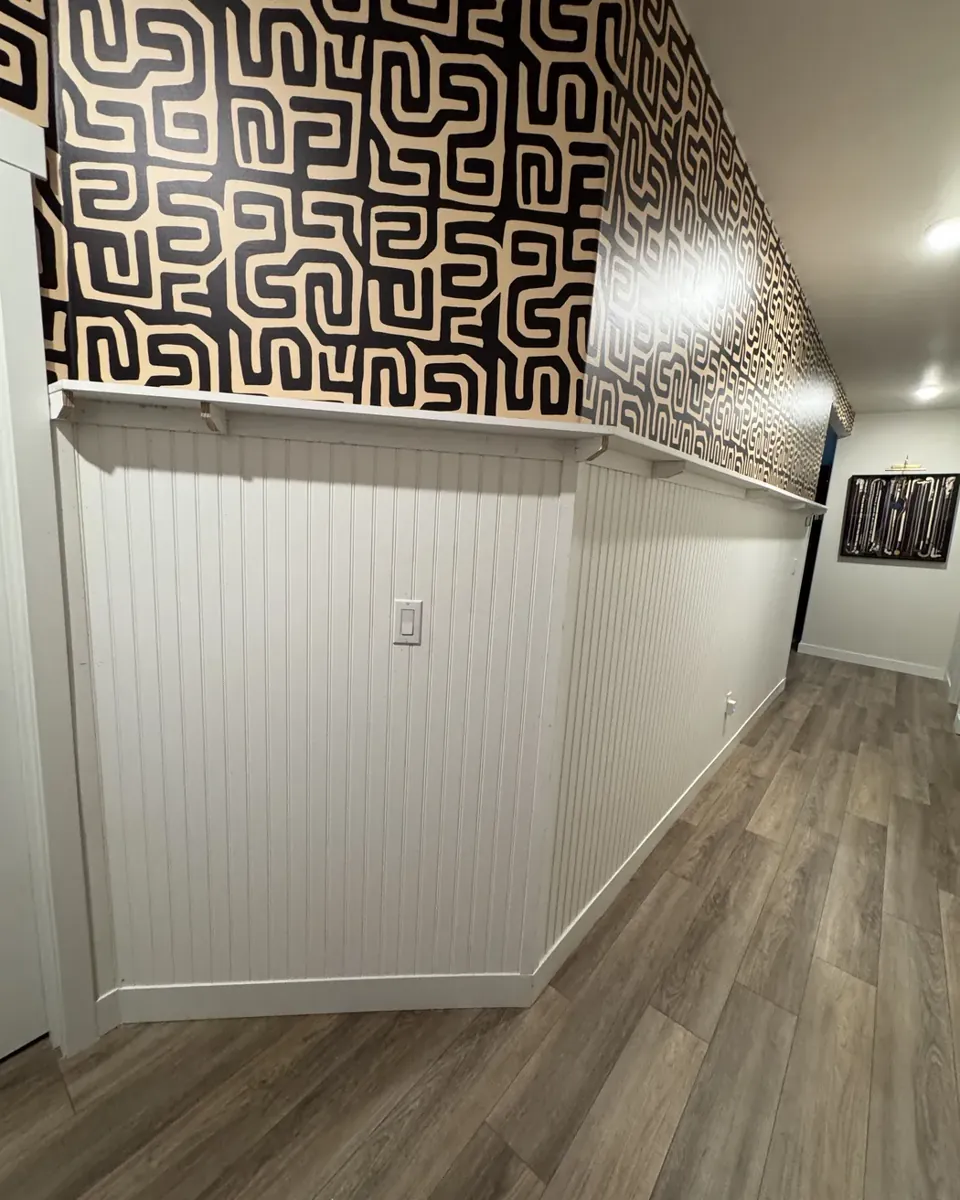
Wainscoting, beadboard or a painted lower wall with a chair rail protects the lower third of the wall where most damage happens, while wallpaper above gives the hallway personality. Our portfolio includes a bold maze pattern above beadboard in exactly this setup.
Protect outside corners
Outside corners in hallways take the most bumps. Wallpaper should wrap around an outside corner rather than end on it, which keeps the edge from peeling. Clear corner guards are an option in very busy homes.
For more on materials, see vinyl vs nonwoven vs paper.
Hallways that are also galleries
Many hallways double as places to hang family photos and art. Wallpaper and frames can work together if the pattern is not too busy — a texture, a tone-on-tone design or a soft geometric lets the art stand out. If you plan to hang many frames, use the right hangers so the paper is not torn, and note that moving frames later will leave small holes; keep a spare roll for patches.
Entries and mudrooms
Entries take wet coats, umbrellas and boots, especially in a Seattle winter. Scrubbable vinyl or a wainscot with wallpaper above works best. In mudrooms with hooks and benches, consider papering above the bench height only, and use a painted or paneled surface where wet coats hang.
Apartment and condo corridors
Shared corridors in multifamily buildings use commercial wallcovering, usually Type II vinyl, because it stands up to move-ins, carts and constant cleaning. We install these for property managers and HOAs with phased scheduling so residents can still use the hallways.
Light and long hallways
Hallways are often lit by ceiling fixtures close to the wall, which shows texture and seams. A smooth, primed wall and a matte paper keep the result clean. Light-colored papers can also brighten a dim hallway noticeably.
FAQ
Is grasscloth a good choice for a hallway?
Generally not for busy hallways — it marks easily and cannot be washed. A vinyl grasscloth look is a durable alternative.
What is the most durable residential wallpaper?
Solid vinyl with a scrubbable rating is the toughest common residential option.
How do I protect wallpaper in a hallway with kids and pets?
Choose a scrubbable vinyl, pair it with wainscoting on the lower wall, and wrap outside corners. Keep a spare roll for repairs.