
Quick answer
In older homes, wallpaper is often several layers deep, sometimes painted over and frequently on plaster. Removal is done in stages with soaking or steam, followed by plaster repair and sealing. For homes built before 1978, plan for lead testing and lead-safe practices before scraping or sanding.
Key points
- Several layers of wallpaper are common in older houses.
- Plaster usually tolerates soaking better than drywall.
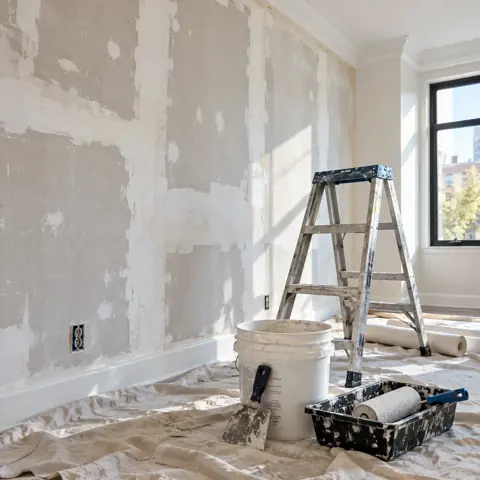
- Cracks and loose plaster appear once paper is off.
- Pre-1978 paint layers should be tested for lead.
What older walls hide
Many Seattle-area houses from the early and mid 1900s have been redecorated many times. It is common to find two or three layers of wallpaper, paper painted over, or wallpaper hung directly on plaster or on early drywall. Each combination comes off differently.
Plaster vs drywall
| Plaster | Drywall | |
|---|---|---|
| Reaction to water | Generally tolerant | Face paper can soften and tear |
| Typical issues after removal | Cracks, loose areas, old patches | Torn face paper |
| Repair | Crack repair, re-securing, skim coat | Seal torn areas, patch, skim |
The process in older homes
- Test area to identify layers and wall type.
- Lead check planning if the home is pre-1978.
- Protection of floors and trim; woodwork in older homes is often original.
- Layer-by-layer removal with soaking or steam.
- Adhesive washed off.
- Plaster cracks repaired, loose areas addressed, surface sealed.
- Skim coat where needed, then primer for paint or new wallpaper.
Lead safety
Homes built before 1978 may contain lead-based paint in older layers, including paint over or under wallpaper. Testing should be done before scraping or sanding, and lead-safe work practices used where lead is present. Mention the age of your home when you request an estimate.
Protecting original woodwork
Old fir and oak trim, built-ins and stair railings are worth protecting. Water and scrapers are kept away from finished wood, and trim is masked before work begins.
What comes next
After removal and repair, the wall can be painted or prepared for new paper. Older rooms often have walls that are out of plumb, which is planned into the new layout. See wallpaper removal, wall preparation and removing painted-over wallpaper.
FAQ
Is it normal to find several layers of wallpaper?
Yes, in older homes it is common. Each layer is removed in turn before the wall is repaired.
Does plaster need a skim coat after wallpaper removal?
Not always. It depends on cracks, patches and how smooth the surface is after repairs.
Why does the age of the home matter?
Homes built before 1978 may have lead paint, which changes how scraping and sanding should be done.