Quick answer
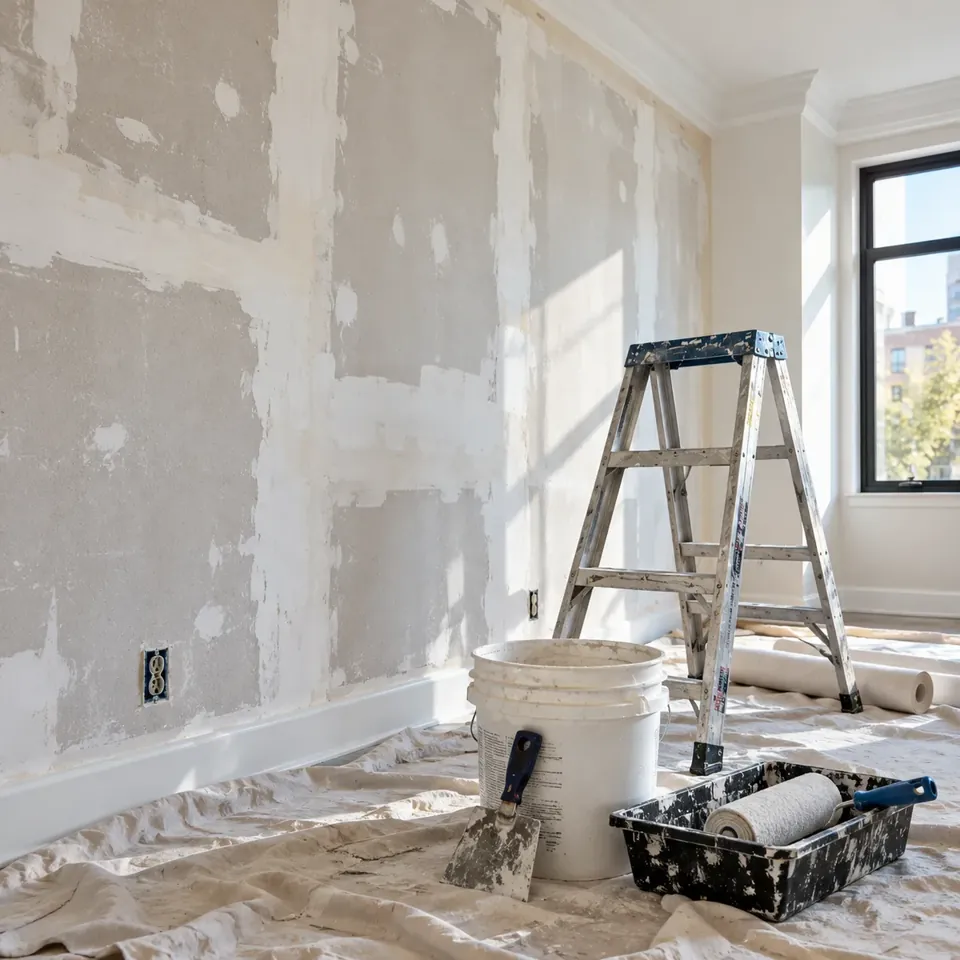
Paint over wallpaper blocks water, so the paper cannot simply be soaked off. The paint layer is scored or broken, removal solution is applied in stages, the paper and backing are scraped off, then adhesive is washed away and damaged drywall is sealed and repaired.
Key points
- Visible seams or bubbles under paint often mean wallpaper.
- Paint makes soaking slower.
- Drywall damage is common if it was never primed.
- Older homes may need lead testing before scraping.
How to tell if there is wallpaper under the paint
- Faint vertical lines at regular intervals (seams).
- Bubbles or blisters in the paint.
- An edge visible around an outlet when the cover is removed.
- Paint peeling in sheets that have paper on the back.
Send close-up photos of these spots; see what photos to send.
Why it is harder than bare wallpaper
Wallpaper removal relies on water softening the paste. Paint, especially semi-gloss or several coats, keeps water out. The paper has to be opened up before soaking can work, and each layer adds time.
The removal process
- Test area. Check how many layers there are and how the wall reacts.
- Protect the room. Floors, trim and outlets covered.
- Break the paint film. Score carefully without cutting into the drywall.
- Soak in stages. Warm water with removal solution, given time to work; steam for stubborn areas.
- Scrape. Paint and paper come off together, then the backing.
- Wash adhesive. Leftover paste causes later paint or wallpaper failures.
- Seal and repair. Torn drywall face sealed with a suitable primer, then patched.
Removal or sealing over?
In some cases, when painted wallpaper is tightly bonded everywhere and the wall will only be painted again, sealing and skim coating over it may be discussed. It is not a good base for new wallpaper: moisture from new paste can release the old layer. We review the condition and explain the options; see wallpaper removal.
Older homes: homes built before 1978 may have lead-based paint in older layers. Testing and lead-safe work practices should be planned before scraping or sanding.
After removal
The wall is primed for paint or for new wallpaper. If texture or damage remains, a skim coat may be part of wall preparation.
FAQ
Why does painted wallpaper take longer to remove?
The paint keeps water from reaching the paste, so the surface has to be opened up and soaked in stages.
Can I just paint over wallpaper again?
It can work for a while if the paper is fully bonded, but peeling and visible seams are common. It is not a suitable base for new wallpaper.
Will the drywall be damaged?
If the drywall was never primed, some face paper may tear. Damaged areas are sealed and repaired before painting or papering.