Quick answer
Wallpaper seams usually show because the wall was not primed, the paper shrank as it dried, the seam was overlapped or rolled too hard, paste dried before the seam was set, or the edges were damaged before hanging. Some materials, like grasscloth, have visible seams by nature.
Key points
- Gaps that appear as paper dries usually mean the paper was stretched or not booked.
- White lines at seams often come from a light-colored wall showing through; a tinted primer helps.
- Lifting edges point to missing paste or an unprimed, porous wall.
- Grasscloth and natural papers always show some seams.
The five most common seam problems
1. Gaps that open as the paper dries
Paper expands when wet and shrinks as it dries. If a traditional paper was not booked long enough, or if strips were stretched while being positioned, the seams pull apart as the paste cures. Paste-the-wall nonwovens are much less prone to this.
2. White lines at the seams
Even a perfectly butted seam can show a thin line if the wall underneath is a contrasting color. Dark papers over white walls are the classic case. A primer tinted close to the paper's background color, or coloring the edges with a matching pencil before hanging, makes seams disappear.
3. Curling or lifting edges
Edges lift when there is not enough paste at the seam, when the paste dried before the seam was pressed, or when a porous unprimed wall soaked the paste up. Very dry indoor air from heating can make it worse in winter.
4. Shiny or flattened seams
Pressing seams with a hard roller can crush embossed or textured papers and leave a shiny line. Many papers need only a light touch with a soft roller or brush.
5. Overlapped seams
Most modern papers are designed to butt edge to edge. Overlapping creates a ridge that catches the light. Some murals are an exception and are designed to overlap and be double-cut.
Seams on grasscloth and naturals
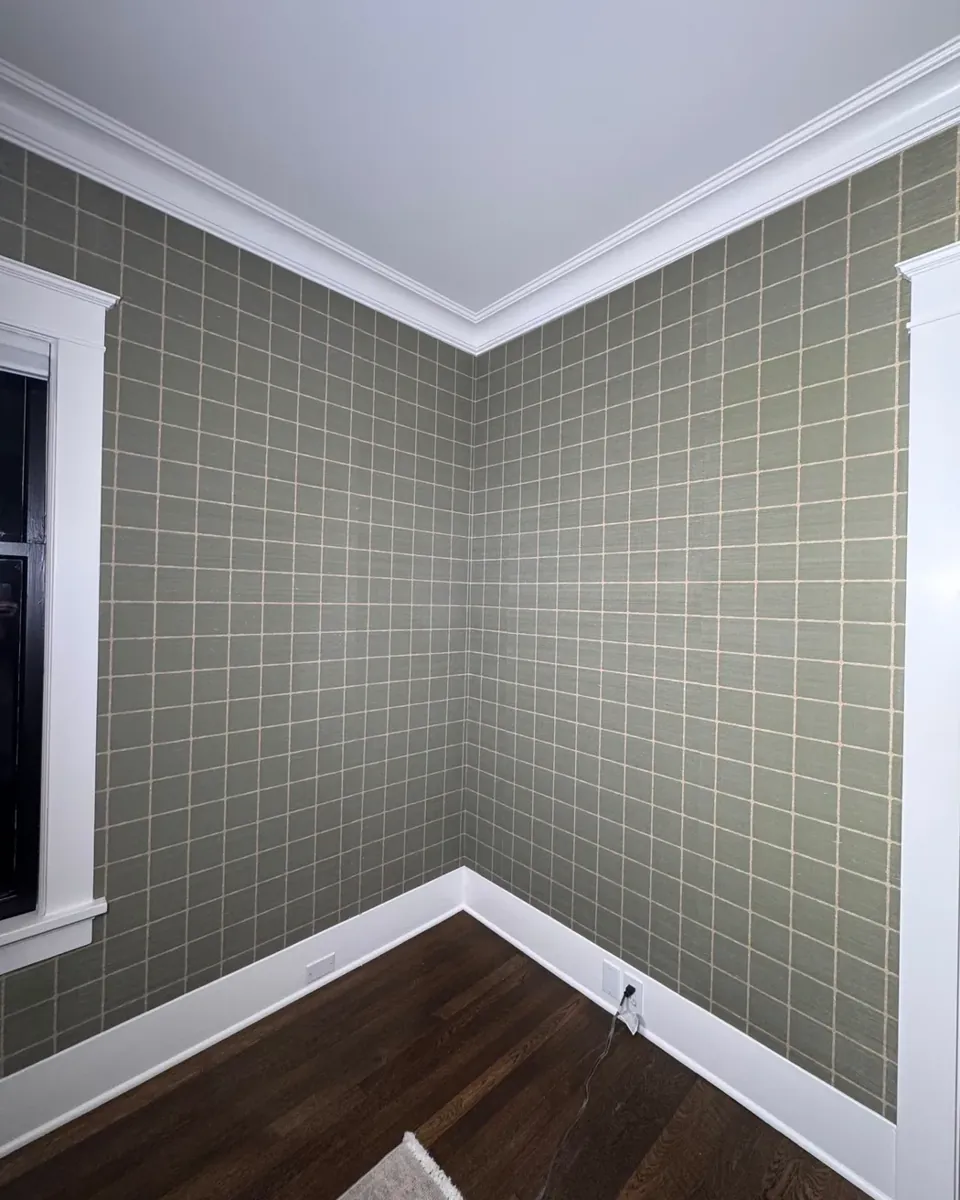
Natural wallcoverings show seams because the woven fibers end at each edge, and color can vary across a strip. A good installation keeps seams straight and even, but they will not vanish. Shading between strips can be reduced by reverse-hanging when the manufacturer recommends it. See our grasscloth service.
How seam problems are fixed
- Lifting edges: a small amount of seam adhesive is worked under the edge, pressed flat and the surface cleaned.
- Small gaps: on some papers, a matching colored pencil or touch-up paint makes a hairline gap invisible.
- Large gaps or crushed seams: the strip is replaced with a new one from the spare roll — another reason to keep one, as explained in our ordering guide.
- Seams lifting across a whole room: usually a primer or moisture problem, which needs fixing at the wall level.
How we prevent visible seams
Wallcovering primer on every wall, the right paste for the paper, correct booking time, butted seams set with light pressure, and a check of every seam before we leave. It is a big part of what you pay a professional for — see DIY vs professional installation.
Seams and Puget Sound weather
Our winters are damp outside and dry inside once the furnace runs for months. Paper hung in a cold, damp house and then heated quickly can shrink faster than the paste can hold it, and seams open. Hanging in a room kept at normal living temperature, and avoiding space heaters pointed at fresh paper, lets the paste cure evenly. In summer, open windows and direct sun can dry paste at the seams too fast, so we shade windows on hot afternoons while we work.
How to inspect seams after installation
- Wait a full day for the paste to cure.
- Stand at normal viewing distance — the doorway or the sofa — rather than with your nose to the wall.
- Look at the wall with the lights on and again with daylight from the windows.
- Run a fingertip gently along the seams. They should feel flat, with no raised edge.
- Check the outside corners and the seams near doors, which get the most handling.
A seam you can only find by searching with a flashlight held flat to the wall is a good seam. A seam that catches your eye from across the room is worth a call.
Seam problems that are really wall problems
If seams are lifting all over a room, the issue is almost always under the paper: a chalky flat paint, a glossy paint without primer, dust from sanding, leftover adhesive from old wallpaper or moisture coming through the wall. Gluing seams down one at a time will not fix that. The lasting repair is to remove the paper, correct the surface and rehang — which is why prep is the first line of every estimate we write.
Seam tips by wallpaper type
| Wallpaper | Seam risk | What helps |
|---|---|---|
| Nonwoven | Low | Full paste coverage at the edges, light roller |
| Traditional paper | Gaps from shrinking | Consistent booking time, no stretching |
| Heavy vinyl | Curling edges | Correct heavy-duty adhesive, seam adhesive where needed |
| Dark papers | White lines | Tinted primer, colored edges |
| Grasscloth | Visible by nature | Straight, tight seams, reverse-hanging if specified |
FAQ
Is it normal to see wallpaper seams?
On most papers, seams should be nearly invisible from a normal viewing distance. On grasscloth and natural papers, some seam visibility is normal.
Can lifting wallpaper seams be glued back?
Yes, with seam adhesive, if the paper and wall are otherwise sound. If seams lift throughout the room, the cause is usually the wall surface.
Why are my wallpaper seams turning white?
Usually the wall color is showing through a hairline gap, or paste dried on the seam. A tinted primer before hanging prevents it; existing white lines can sometimes be colored in.